EMA Guidelines for COVID-19 Impact on Clinical Trial Methodology
The European Medicines Agency (EMA) published a new draft guideline for clinical trials inviting sponsors to evaluate the implications of COVID-19 on methodological aspects of ongoing trials.
This guidance covers actions that sponsors of ongoing clinical trials affected by the coronavirus disease pandemic should take to help ensure the integrity of their studies and interpretation of study results while safeguarding the safety of trial participants as a first priority.
This complements the good clinical practice guidance on how sponsors should adjust the management of clinical trials and participants during the COVID-19 pandemic.
EMA’s Biostatistics Working Party encourages affected clinical trial sponsors to seek scientific advice on these matters.
- Sponsors should collect a sufficient amount of information on pandemic-related measures and whether trial patients or trial conduct were affected
- The sponsor should also evaluate information on the subpopulations of exposed/non-exposed, and infected/non-infected patients will be necessary to study the impact on the treatment effect. Sponsors should collect this information to the extent feasible, and in a pragmatic manner.
- In some cases, an independent Data Monitoring Committee may be necessary, particularly to help sponsors re-start the usual trial operations, adjust the trial sample size and/or to deal with any potential sources of bias.
- Patient safety is paramount and at the heart of every decision taken, regardless of any potential consequences for an ongoing trial.
- It is an ethical mandate to proceed with a trial that has been started as long as there is an opportunity that the efforts taken by patients and physicians can benefit drug development and patient care
In line with this guidance, EMA will be flexible and pragmatic during the assessment of affected clinical trial data submitted to the Agency as part of marketing authorization applications.
The guidance is under a four-week public consultation until 25 April 2020.
Please note that further updates are possible and likely given the rapidly evolving nature of the pandemic.
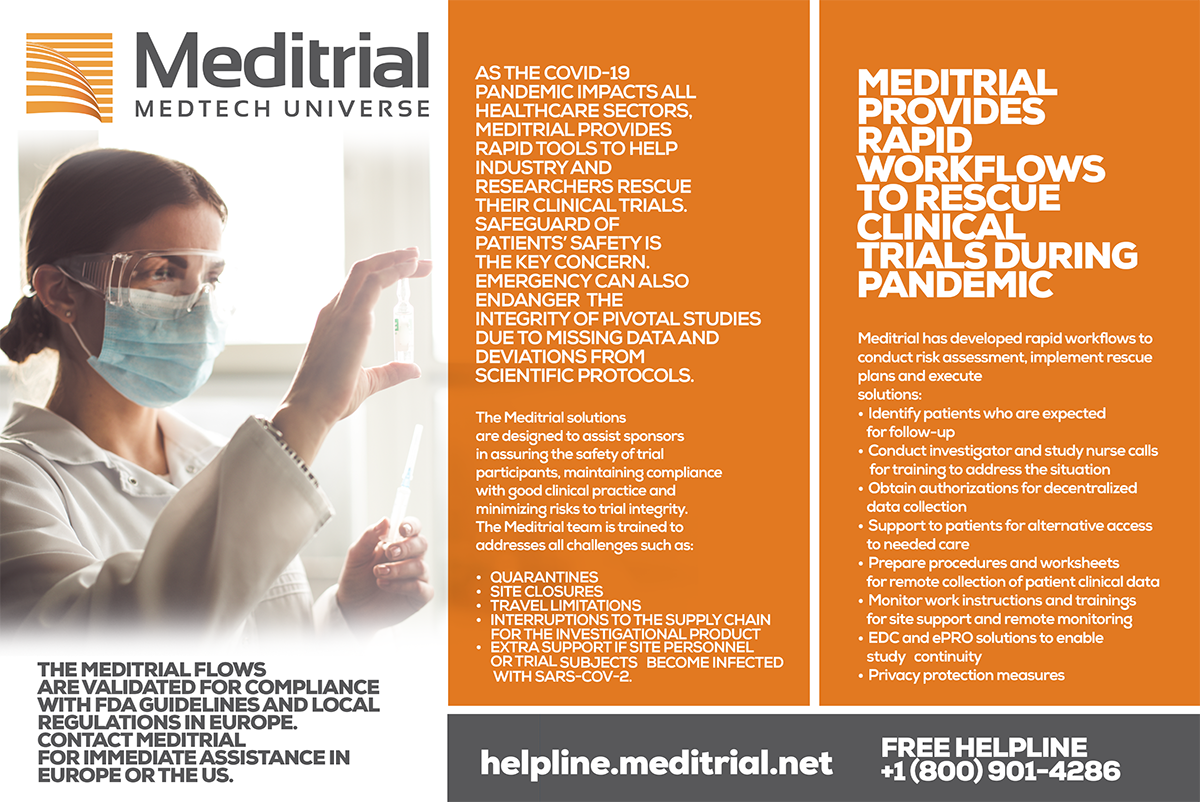
Meditrial can help – Contact us for immediate support
Meditrial has developed rapid workflows to conduct risk assessment, implement rescue plans and execute solutions for ongoing clinical trials:
- Identify patients requiring follow-up
- Conduct investigator and study nurse calls for training to address the situation
- Obtain authorizations for decentralized data collection
- Support to patients for alternative access to needed care
- Prepare procedures and worksheets for remote collection of patient clinical data
- Monitor work instructions and trainings for site support and remote monitoring
- EDC and ePRO solutions to enable study continuity
- Privacy protection measures
Table of Contents
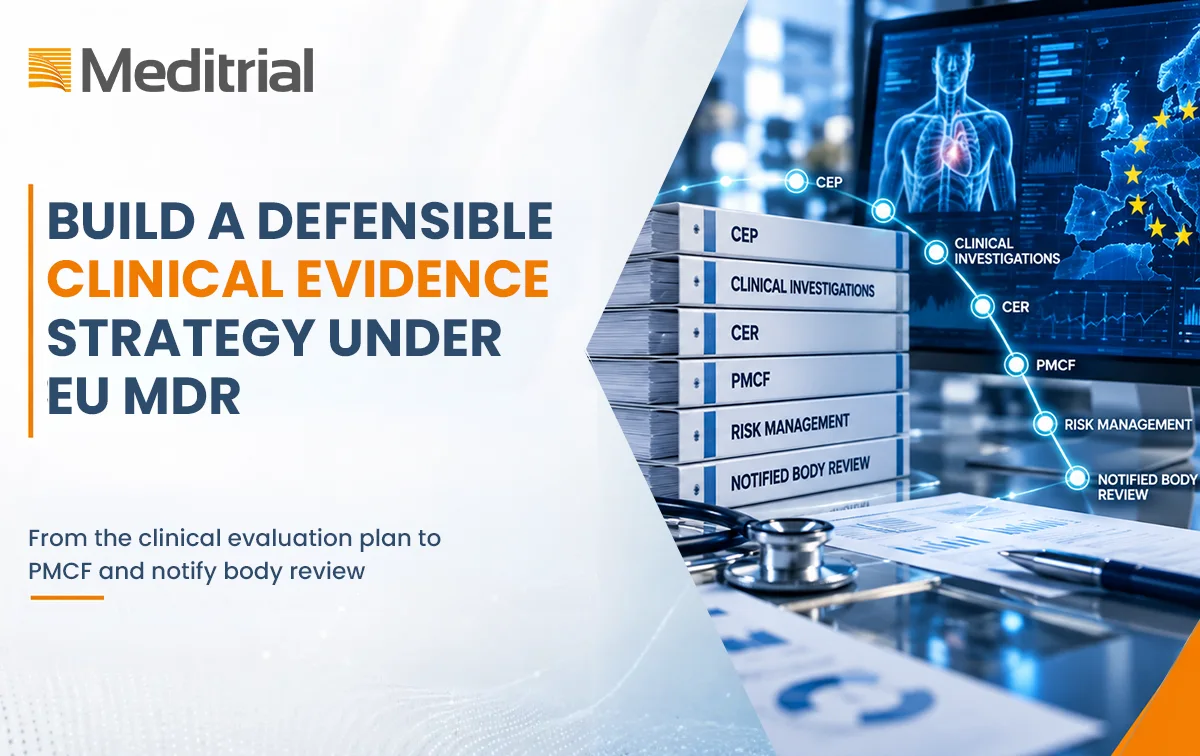
Build a Defensible Clinical Evidence Strategy Under EU MDR
Build a defensible clinical evidence strategy under MDR Annex XIV, from the clinical evaluation plan to PMCF and notified body review.
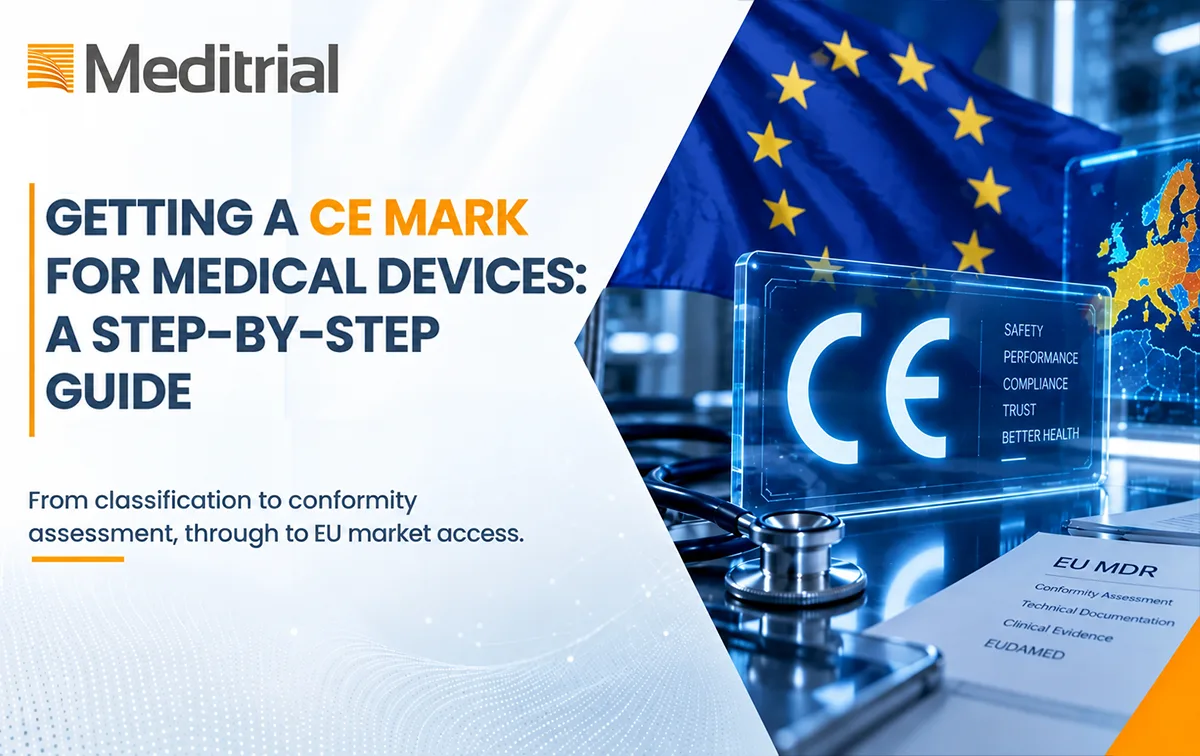
Getting a CE mark for medical devices: a step-by-step guide
Practical guidance on the CE mark for medical devices under EU MDR, from classification and evidence to conformity assessment and EUDAMED
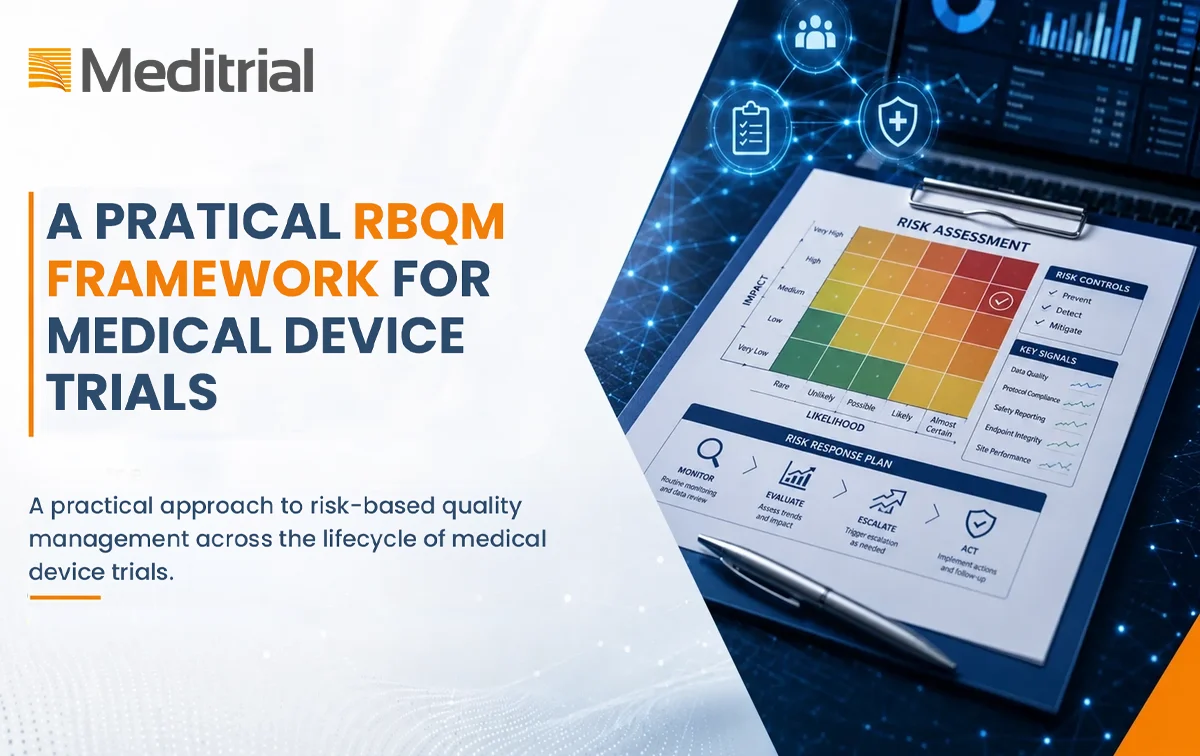
A Practical RBQM Framework for Medical Device Trials
Risk-based quality management for medical device trials, with practical actions for risk assessment, monitoring, data review, and trial oversight
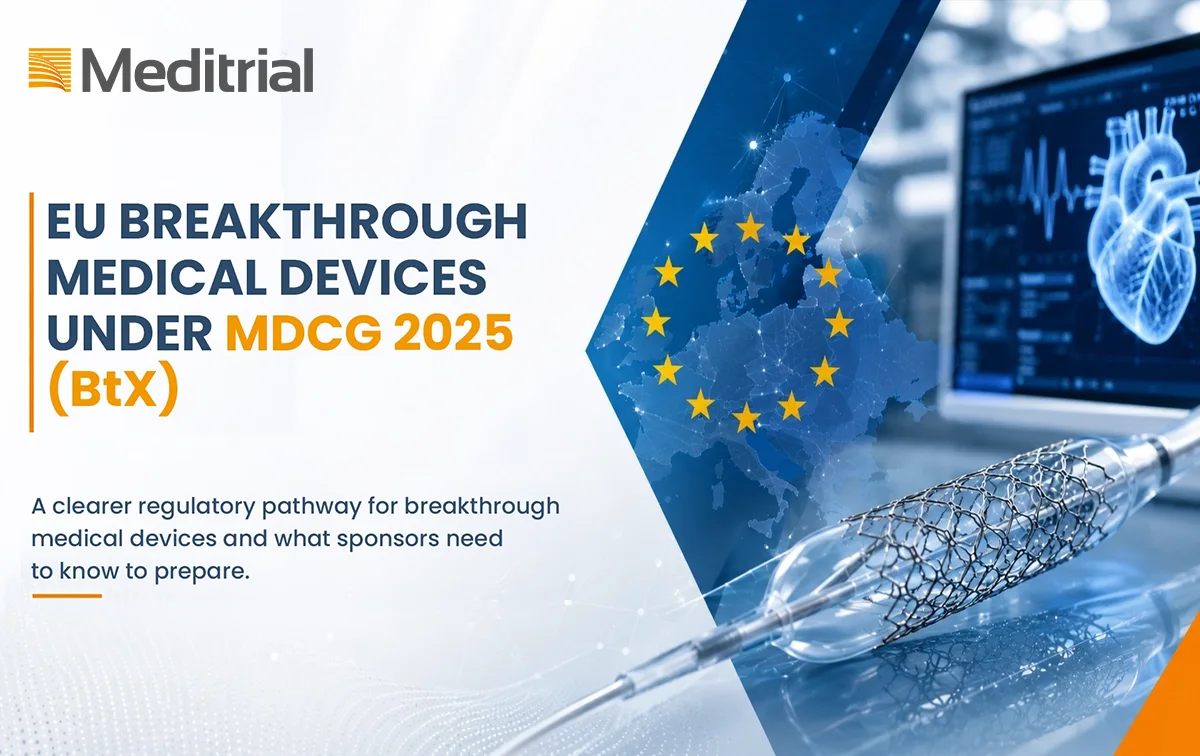
EU Breakthrough Medical Devices Under MDCG 2025-9 (BtX)
EU breakthrough medical devices gain a clearer regulatory pathway under MDCG 2025-9, with early advice and lifecycle evidence planning
What Swissmedic Fast-Track Means for Clinical Trial Sponsors
Swissmedic swissethics Fast-Track Pilot Project accelerates eligible trial reviews and makes coordinated regulatory preparation increasingly important.
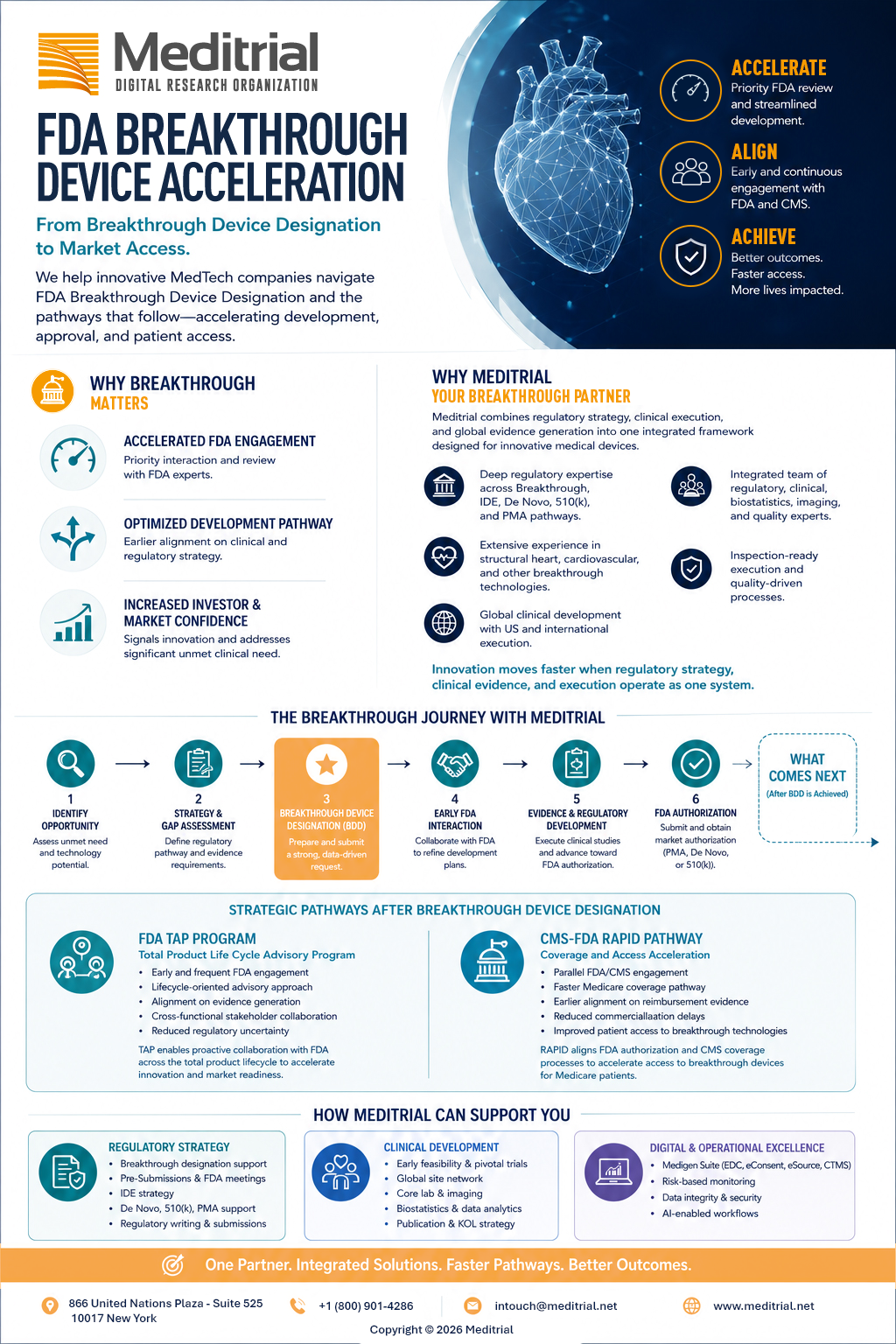
FDA Breakthrough Device Acceleration
How innovative MedTech companies can accelerate FDA approval, secure Medicare coverage, and reach patients faster—starting with Breakthrough Device Designation.
This article provides general information and does not constitute regulatory or legal advice. Requirements should be confirmed for the specific study, applicable regulatory framework, and markets concerned.